Climate shelters and heat resilience: how everyday places become climate infrastructure
Abigail Mela ·

Every summer brings another red-shaded map of Europe. Temperatures above 40°C, records broken, heat spreading across regions. What those maps cannot show is what happens underneath them, in the shopping streets, plazas, parks and terraces where people actually spend their days. Heat changes how a place is used, how long people stay and, eventually, whether they choose to use it at all.
Barcelona has spent the last several summers building a practical response to that problem, and its approach to climate infrastructure is worth understanding well beyond the city's borders.
A climate shelter network built from what already exists
In 2020, Barcelona launched its Climate Shelter Network with around 70 spaces offering thermal comfort during extreme heat. By 2026, that network has grown past 500 locations across the city with libraries, community centres, museum foyers, shopping centers, markets, parks and gardens among them. The wider metropolitan area, coordinated by the Àrea Metropolitana de Barcelona (AMB), runs a parallel network across the surrounding municipalities.
The expansion from around 70 to more than 500 spaces is significant. More interesting, however, is what the network is made of. Barcelona's own criteria are specific: climate shelters should be easily accessible and, where possible, offer seating and free drinking water alongside thermal comfort. These spaces are not built solely for that purpose. They keep their everyday function while taking on the shelter role. This means that a library is still a library, a market is still a market, and a park is still a park. But during a heatwave, each one simply does more.
Turning individual locations into a usable network creates another operational challenge. These climate refuges only help if people can reasonably reach them, and their opening hours need to correspond with the periods when heat exposure is highest. Residents also need to know where refuges are and when they are accessible. Above all, a designated location must provide the expected conditions when people actually arrive.
This is an important distinction. A city can have hundreds of cooling locations on a map and still have gaps in the service they collectively provide. Thinking in terms of a network shifts attention from the number of locations towards coverage, accessibility, availability and operational reliability.
Why everyday places make effective climate infrastructure
What Barcelona and the AMB demonstrate is a different way of thinking about climate infrastructure: resilience can become an additional function of places that already have a purpose, a maintenance budget and an established pattern of use.
A commercial street, hotel terrace or campus courtyard still needs to function during extreme heat. Whether people continue to use it increasingly depends on how comfortable it remains. Adding thermal relief helps protect both the everyday function of the place and its usability during hotter periods.
From public shelters to commercial outdoor space
The climate refuge model began as a public-health response to extreme heat, especially for the most vulnerable residents. But the underlying logic extends well beyond that use case. Cities aren't the only ones managing outdoor space under increasing heat pressure. For a municipal climate shelter, usability is primarily a public-health question. But for a commercial place like a retail street, a hotel terrace or a campus courtyard, the same question extends further: footfall, dwell time, outdoor revenue and asset performance all depend on whether people find the space usable through the hottest parts of the year.
Keeping these places usable brings several disciplines together. Accessibility matters, because thermal relief has limited value if a space can't be comfortably reached or used by older visitors, people with mobility constraints or families with young children. Hospitality and retail operations matter because opening hours, staffing and seating decisions can provide an immediate operational response to heat, even before physical infrastructure changes are made. Real estate performance matters too, since the commercial viability of outdoor space is directly affected by whether people find it usable during the hottest months.
Water infrastructure: the operational questions behind cooling
Water infrastructure deserves particular attention within this broader climate infrastructure discussion because outdoor climate refuges are not only an urban-design question. The moment cooling relies on misting, fountains, irrigated greenery or any other water-based approach, a second set of questions opens up: where the water comes from, how it drains, who maintains the system, how reliable it is during exactly the periods of highest demand, and how it's kept safe for public use. This is where the discussion moves from spatial design into infrastructure operations: supply, drainage, maintenance, safety and reliability.
Several of these questions become more complicated in operation than they appear at design stage. The presence of a nearby water connection does not by itself establish whether sufficient supply, pressure or storage is available for the intended cooling strategy. Drainage also must be considered under sustained operation, particularly on heavily sealed urban surfaces.
Water quality introduces another operational requirement. Recirculating systems require appropriate treatment, monitoring and maintenance, particularly where people can come into contact with the water. Seasonal systems also need commissioning, inspection and maintenance procedures that ensure they are ready before periods of peak demand.
Responsibility matters as much as engineering. Water operations, public works, parks departments and property managers may all touch different parts of the same cooling infrastructure. Clear ownership of operation, maintenance, water safety and performance therefore needs to be established before the hottest days arrive.
Ultimately, the infrastructure has to remain reliable during sustained heat, precisely when water demand elsewhere in a city may also be elevated. Designing for peak conditions rather than normal operating conditions is therefore part of designing for resilience.
None of these are new fields. What's changing is that they're increasingly being asked to solve the same problem from different angles, and the places that do this well are treating heat resilience as one more layer of what a well-run public or commercial space already has to manage, rather than as a separate initiative bolted on beside it.
Retrofitting heat resilience into existing places
As more existing places take on a heat-resilience role, formal recognition becomes only one part of the picture. Whether a location qualifies as an officially recognized climate shelter depends on the criteria set by the relevant city or program. A plaza that remains comfortable for longer, or a shopping street that stays usable through the hottest hours, is already becoming more resilient whether it carries an official designation.
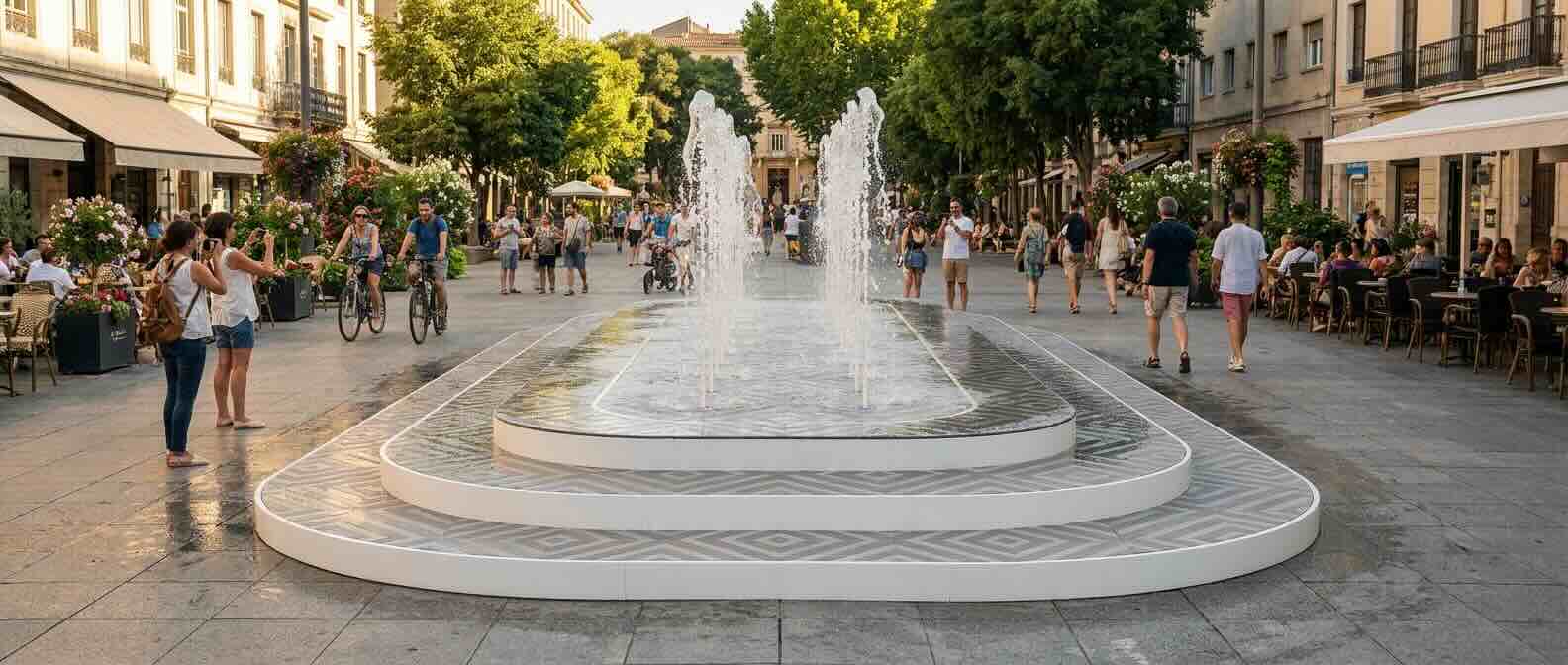
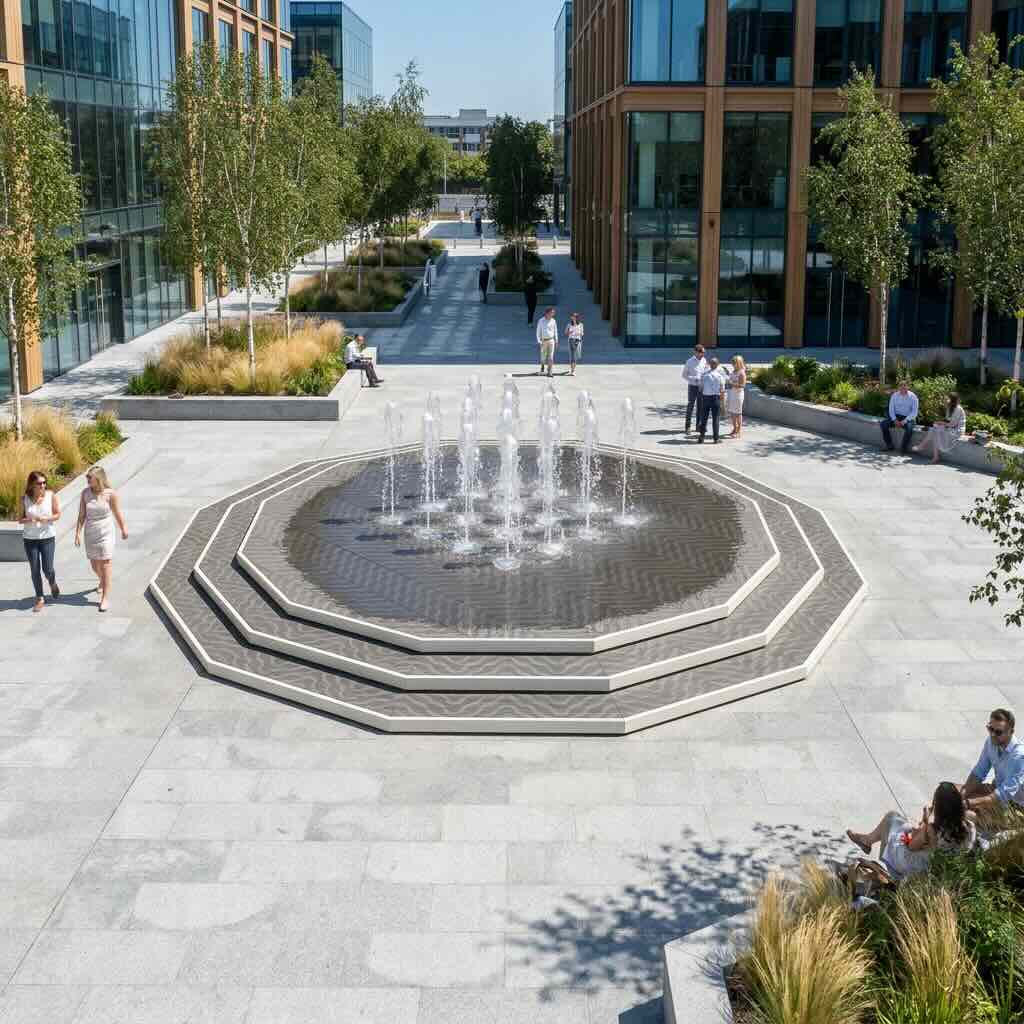
Extending this logic to more outdoor places also raises a delivery question: how can additional cooling capacity be introduced without fundamentally rebuilding the place? The AERISIO Oasis is designed to integrate cooling into existing outdoor spaces while allowing them to continue serving their everyday purpose. An Oasis can support thermal relief and strengthen the heat resilience of a place, while formal climate refuge status remains subject to the criteria of the relevant city or program.
The broader shift in climate infrastructure
Barcelona's network demonstrates how much climate-resilience capacity can be created by looking differently at places that already exist. As hotter summers place greater demands on public and commercial outdoor spaces, heat resilience will not depend only on creating dedicated infrastructure. It will also depend on equipping existing places to remain comfortable, usable and active under conditions they were not originally designed to handle.
That is also where fast, modular cooling infrastructure becomes relevant: not as a separate layer added beside the place, but as part of how the place itself can continue to perform.
AERISIO develops fast, modular cooling infrastructure for heat-resilient cities and properties. Explore how an Oasis could support an existing outdoor space in taking on a stronger cooling and resilience role. Explore AERISIO: www.aerisio.com
Frequently asked questions
What is a climate shelter network? A climate shelter network is a coordinated set of accessible spaces that offer thermal comfort during extreme heat. Barcelona's network, launched in 2020 with around 70 spaces and grown past 500 by 2026, is built largely from everyday places — libraries, markets, museums, parks and shopping centers — that keep their normal function while providing relief during heatwaves.
What makes a good climate refuge? Beyond thermal comfort, effective climate refuges are easily accessible, open during the hours when heat is highest, and reliable — providing the expected conditions when people actually arrive. A network's value depends less on the number of locations than on coverage, accessibility, availability and operational reliability.
Can a commercial space become a climate refuge? The commercial logic mirrors the public one: footfall, dwell time, outdoor revenue and asset performance all depend on whether a space stays usable in heat. A retail street, hotel terrace or courtyard that remains comfortable is more resilient whether or not it holds official designation, which depends on the criteria of the relevant city or program.
What water infrastructure questions come with outdoor cooling? Any water-based cooling — misting, fountains, irrigated greenery — raises operational questions of supply, pressure, drainage, water quality, maintenance and reliability during peak demand, along with clear ownership of who operates and maintains the system. These matter most precisely when heat, and wider water demand, are highest.
How can cooling be added to an existing space without rebuilding it? Fast, modular cooling infrastructure allows thermal relief to be added to a space while it keeps serving its everyday purpose. The AERISIO Oasis, for example, installs above ground on an existing hard surface in days, with no excavation, and is monitored continuously for water safety and performance.
About AERISIO
AERISIO is a Nordic property and climate technology company based in Finland. Its product, the AERISIO Oasis, is the first above-ground, productized cooling fountain: a modular, walkable, architectural water feature that installs on any hard surface in days, with no excavation. Design and engineering are automated with the AERISIO Configurator, and each Oasis is monitored continuously by the AERISIO WAVE edge intelligence for water safety and performance. AERISIO brings cooling placemaking to cities, real estate, and private residences.
Contact us to plan an Oasis for your city, portfolio, or residence.